ROSA Knee Surgery
When knee pain makes stairs or short walks difficult, we can help you understand whether replacement is worth considering. At HealthClique in Mohali, your surgeon may use ROSA to assist with planning and guide parts of the operation.
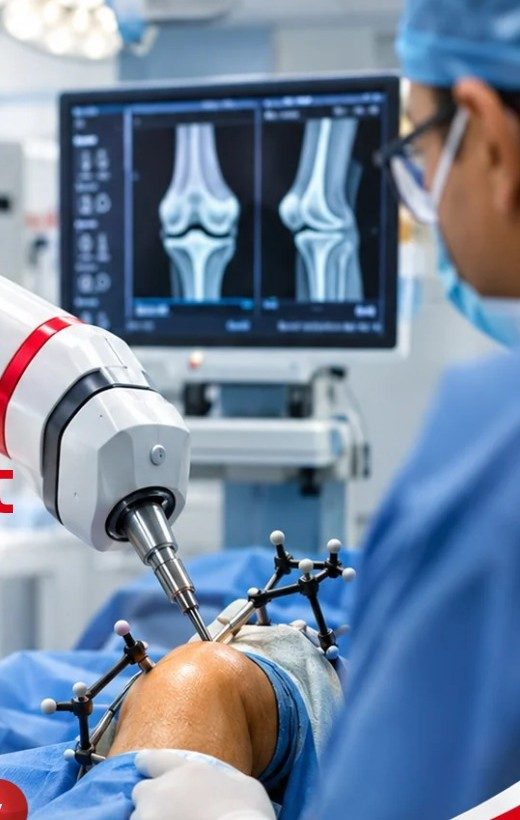
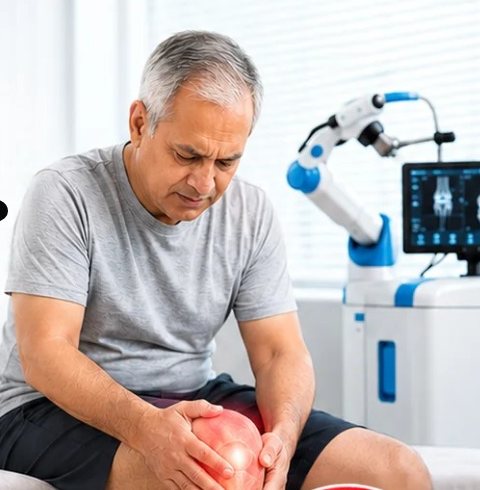
Robotic Knee Replacement
You reach the stairs at your Chandigarh flat after a trip to the market and pause to decide which leg should go first. A family member takes the bags, but you still need both hands on the rail. Tell us what you have changed about your routine and how long the pain has been affecting you.
In total knee replacement, the surgeon prepares damaged joint surfaces and fits metal and plastic components. ROSA is a Zimmer Biomet system that helps the surgeon plan how those components sit and guides instrument positioning. The surgeon checks the measurements, makes the decisions and stays in control. ROSA does not operate on its own.
We ask where it hurts, what treatment you have tried and how far you can walk. We examine your knee and review imaging before discussing suitability. If arthritis is advanced and other care gives little relief, we explain what replacement may offer, what risks apply and what help you may need at home.
Signs and symptoms
Tell us if any of these problems have started to limit what you do in an ordinary week.
01
If you have to stop within your own neighbourhood because of knee pain, note how far you get and whether rest helps.
02
Holding the rail or taking one step at a time can show how pain, stiffness or strength is affecting daily movement.
03
Knee pain that carries on when you sit down or wakes you at night is worth mentioning during an orthopaedic assessment.
04
Tell us if bending to get into a car or straightening the knee after a meal has become difficult or uncomfortable.
05
A leg that appears more bowed or angled than before may prompt us to check alignment, joint wear and walking pattern.
06
Bring details of the exercise, walking aids or medicines you have tried, including what helped briefly and what made little difference.
 ▶ How the ROSA Knee System works (Zimmer Biomet)
ROSA robotic knee system
This short patient video from Zimmer Biomet, the maker of ROSA, shows how the system maps your knee before surgery and gives live data in theatre. At HealthClique, Dr. Vivek Kochar and Dr. Manu Gupta use it to plan and check implant position. The surgeon makes every decision.
How it works
We explain each decision and leave time for you and your family to ask questions.
Step 01
We ask about your day and previous treatment, then assess movement, stability and alignment. Bring earlier X-rays, if available, along with a list of medicines and health conditions.
Step 02
If replacement is suitable after examination and imaging, we discuss implant planning, the role of ROSA, anaesthesia, risks and what you may need to arrange before admission.
Step 03
During surgery, the surgeon reviews the knee measurements and uses the system to assist with positioning the cutting guide. The surgeon prepares the joint surfaces and places the components.
Step 04
Your care team explains how to protect the wound, use a walking aid and begin the exercises prescribed for you. Follow-up helps guide increases in activity as strength and comfort change.
Recovery timeline
Day 1
Most people stand and take a few steps with a walker and the physiotherapist, often within a day of surgery.
Days 3 to 5
Discharge once you can walk safely, manage the toilet and know your exercises. A family member learns them too.
Week 2
Dressing and stitch or clip review. Many people are walking around the house with less support by now.
Weeks 4 to 6
Short walks outside, a sturdier stride, and for many, driving again once the surgeon agrees.
Month 3 and beyond
Longer walks, stairs and travel. The knee keeps getting stronger for up to a year with regular exercise.
A general guide for knee replacement. Your own recovery plan depends on your health, the procedure and your surgeon's advice.
Why HealthClique
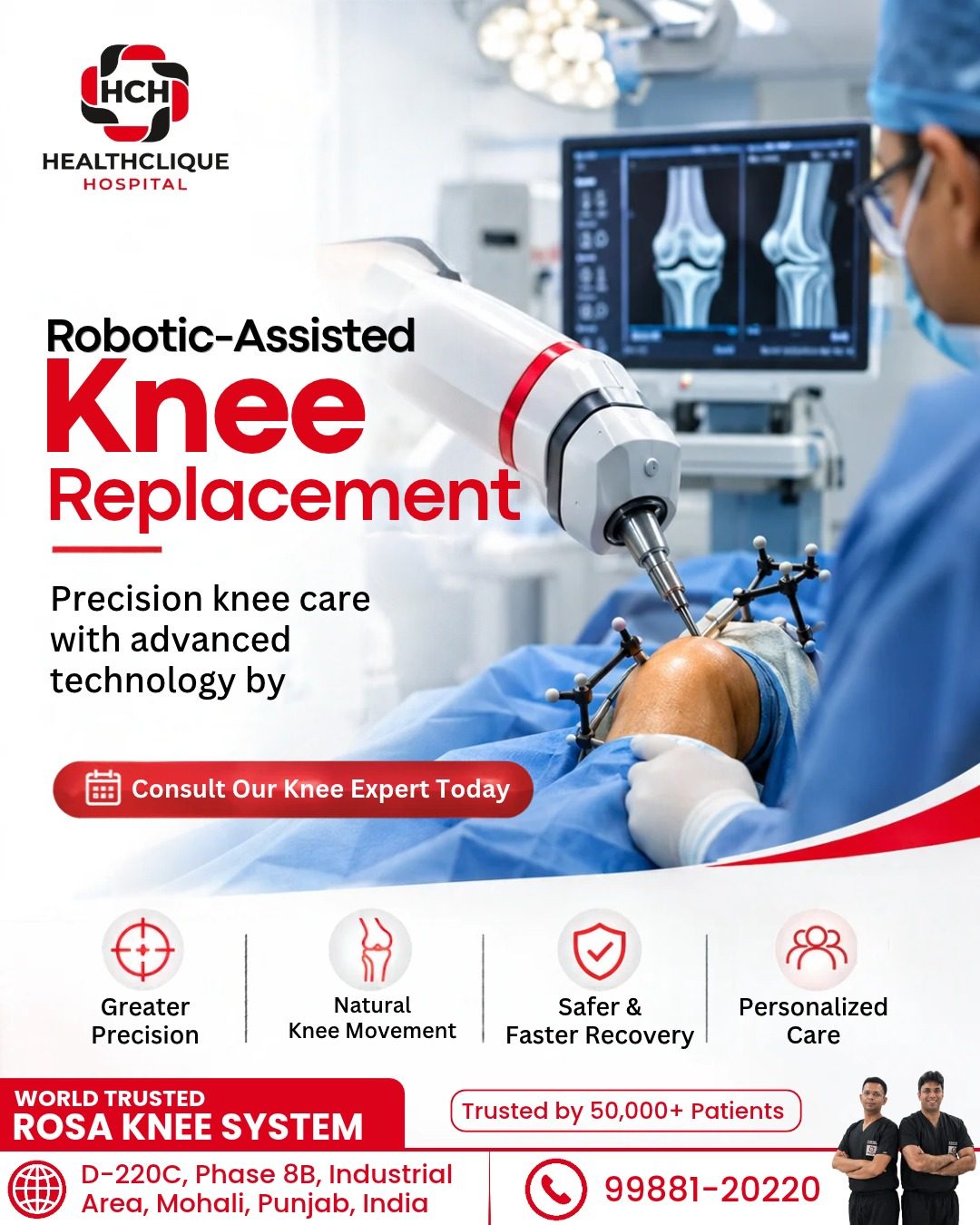
We use the Zimmer Biomet ROSA knee system in suitable cases to support surgical planning and instrument positioning under the operating surgeon’s control.
Dr. Vivek Kochar has more than 18 years of experience and a special interest in joint replacement and robotic knee resurfacing.
Dr. Manu Gupta, MS Orthopaedics and Gold Medalist, is our Director and an orthopaedic surgeon whose work includes joint replacement and robotic knee procedures.
HealthClique has performed more than 1,500 surgeries across its services, and more than 50,000 patients have placed their trust in the hospital.
Good to know
If you live in Panchkula or Zirakpur and are arranging robotic knee replacement in Mohali, plan your return from hospital. Work out where you can sit comfortably, how you will reach the bathroom and who can help with meals and transport. Follow the team’s instructions on walking aids and weight bearing. The help you need varies with your health, balance and home layout.
Walking practice and prescribed exercises usually begin early. Swelling, stiffness and tiredness can affect everyday tasks as you recover. Standing from a chair with less help can be one way to track progress. Over the following weeks and months, your team can adjust activity as movement and strength improve. Ask when you can safely drive given your mobility and medicines.
When comparing ROSA knee replacement options in the Tricity, ask how follow-up will work if getting to Mohali takes time. Keep the instructions for your wound, medicines and exercises where a family member can find them. Seek prompt advice if wound redness spreads or drainage increases. Sudden breathlessness or chest pain requires emergency care because a blood clot is one possible cause after surgery.
Your surgeons
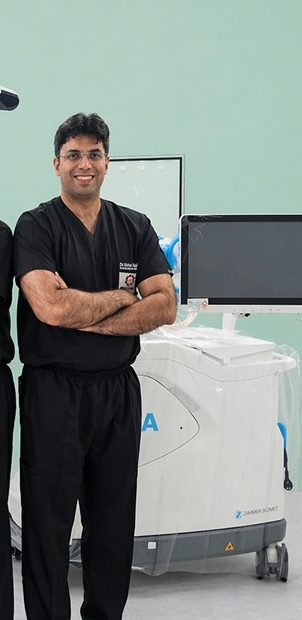
18+ years experience
Orthopaedic surgeon with a special interest in robotic knee resurfacing, joint replacement, sports medicine and arthroscopy.

MS Ortho, Gold Medalist
Orthopaedic surgeon and Director of HealthClique Hospital. Joint replacement, robotic knee procedures and sports injuries.
FAQs
Ask us anything at your visit. You can also call the hospital any time on +91 99881-20220.
No. The surgeon makes the clinical decisions, controls the equipment and performs the replacement. ROSA supplies measurements and helps position a surgical guide. Ask how the surgeon uses that information and which parts of the procedure rely on direct surgical checks.
Suitability depends on whether you need a knee replacement and whether robotic assistance fits the operation planned. The surgeon reviews the examination and imaging, along with your surgical history and general health. Conventional replacement can be another option in suitable cases.
Imaging for diagnosis and imaging for surgical planning serve different purposes. We generally review knee X-rays to understand the pattern of arthritis. ROSA has planning approaches that can use measurements taken during surgery. Ask the surgeon which images they need before booking additional scans yourself.
Stair practice can form part of rehabilitation when your surgeon or physiotherapist clears it. Tell us if the stairs at home have a rail or landing. Improvement depends on strength, balance and comfort, and the pace varies from person to person.
Knee replacement carries risks such as infection, blood clots, stiffness and ongoing pain. Additional risks can apply to robotic instrumentation, including where tracking pins are placed. Discuss your personal risks and ask which symptoms should prompt a call or a visit.
The procedure, implant, investigations, anaesthesia and length of stay can affect the total. Medicines and rehabilitation may also affect your budget. We give an exact estimate after assessment and explain which items are included so you can plan for your care.
Other treatments
Call +91 99881-20220 to arrange a consultation at HealthClique Hospital in Phase 8B, Mohali. Bring any previous knee X-rays and a list of treatments you have tried.