56 questions answered
The questions patients and families in Mohali, Chandigarh and the tricity ask us most, about knee replacement, robotic ROSA surgery, resurfacing, arthroscopy cost, sports injuries and visiting the hospital. Answered by our team in plain words.
No matching questions. Call us on 99881-20220, we will answer it.
HealthClique Hospital offers orthopaedic care in Phase 8B, Sector 75, Mohali. If pain is affecting your sleep, work or ability to walk, a consultation can help identify the cause and what to do next. Bring any past reports so the doctor can see what has already been checked.
Look for a hospital with a specialist who regularly treats your particular problem and can explain the options clearly. Ask who will see you at follow-up and how physiotherapy is arranged if you need it. If surgery is suggested, ask why it fits your diagnosis and what the alternatives are.
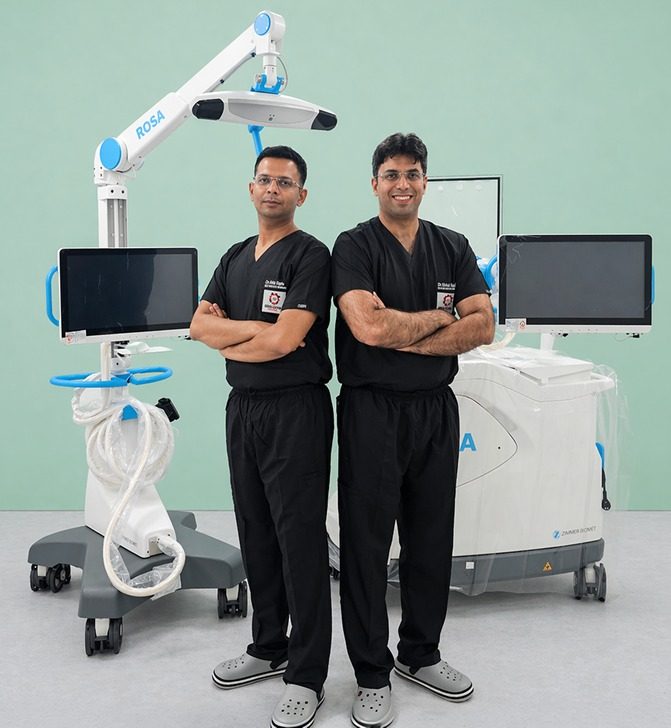
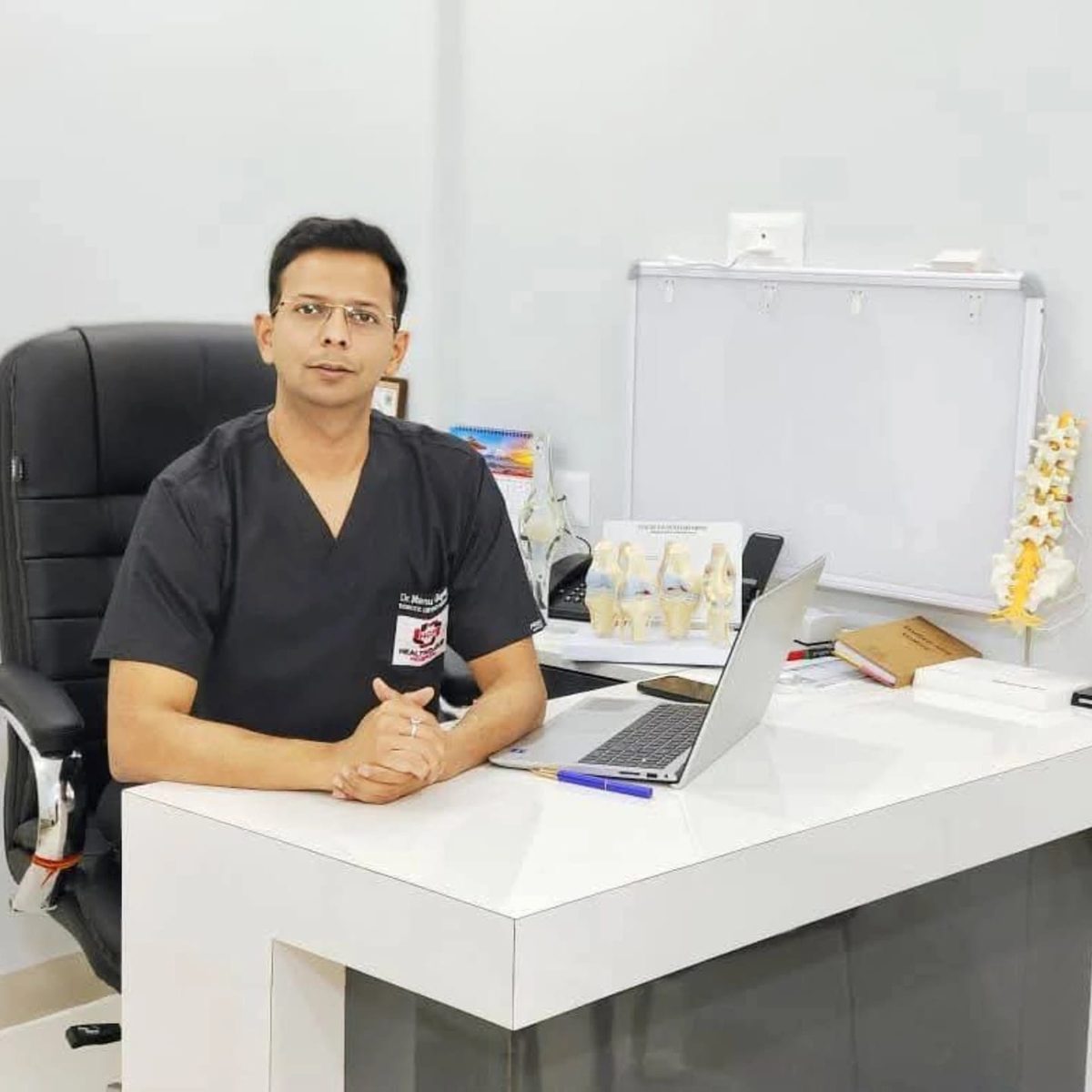
You can ask for an appointment with Dr. Vivek Kochar or Dr. Manu Gupta. Dr. Kochar is an orthopaedic surgeon with 18+ years of experience and a special interest in joints, sports injuries and fractures. Dr. Gupta holds an MS in Orthopaedics, is a Gold Medalist and is the hospital’s director.
Book an assessment if joint pain keeps coming back, disrupts sleep or makes everyday tasks like climbing stairs difficult. Tell the doctor when it started and whether the joint swells, locks or gives way. A suddenly hot, swollen joint with fever needs urgent medical assessment.
You can usually see the doctor before getting an MRI. Your symptoms and examination help determine what imaging would add useful information. X-rays can show changes in bone and arthritis, while MRI can help answer specific questions about soft tissues such as the meniscus or ligaments.
Many people with knee arthritis start with nonsurgical treatment. Exercise or physiotherapy can help strengthen the muscles around the knee, and a doctor can discuss whether pain medicines or a walking aid would suit you. The choice depends on how much pain limits daily life and what the examination and X-rays show.
Yes, you can ask another orthopaedic surgeon to review the diagnosis and proposed operation. Bring the original images, reports and any written surgery plan. Ask what options are available, what might happen if you wait, and how recovery could affect your work or home responsibilities.
The doctor will ask about your symptoms and examine how the joint moves. They may check where it hurts, how steady it feels and how you walk. You may be asked about old injuries, medicines and what makes the pain better or worse. The findings guide any imaging and treatment decisions.
Knee Replacement
8 common questions.
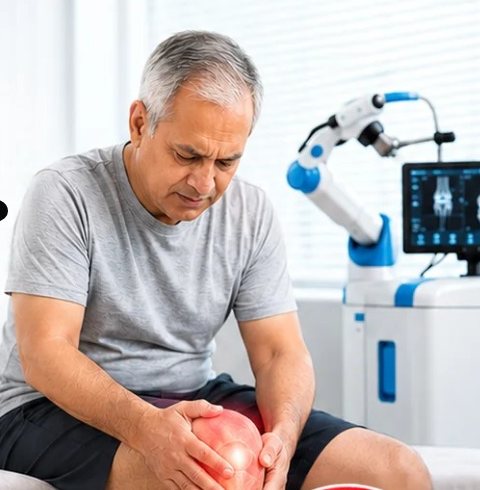
You can consult Dr. Vivek Kochar at HealthClique Hospital in Mohali. Joint replacement is one of his special interests, and he previously worked as a consultant at Fortis, Max and Paras hospitals in Mohali. Bring your X-rays so you can discuss whether replacement is suitable and what other options you have.
Ask who will perform the operation and who will manage your care after discharge. Find out how the hospital handles pain relief, physiotherapy and questions once you are home. If you live outside the city, ask where you can attend follow-up and what the written estimate includes.
The cost depends on the implant, whether one or both knees are treated, the hospital stay and what care is included. An exact estimate is given after assessment. Ask for a written breakdown so you know whether tests, medicines, physiotherapy and follow-up visits are included.
Total knee replacement may be considered when arthritis causes substantial pain or stiffness that limits daily life despite nonsurgical care. Your surgeon will review your symptoms, examine your knee and look at your X-rays. The decision also depends on your general health and what you hope to do more comfortably.
Some patients can have both knees replaced in one operation. Your surgeon and anaesthesia team will weigh the demands of surgery and recovery against your general health, knee findings and home support. Two separate operations may be a better fit if there are health concerns or if managing both knees at once would be difficult.
You can start practising stairs when your physiotherapist says you have enough strength and balance to do it safely. Early on, you may need a handrail or a walking aid and take one step at a time. Tell your care team before surgery if you have stairs at home.
Risks include infection, blood clots, stiffness and pain that continues after surgery. Implants can also wear out or loosen over time and may need further surgery. Ask your surgeon how your health history affects those risks and which symptoms after discharge require urgent help. Get those instructions in writing before you go home.
Plan for some help with meals, transport and household tasks while you get used to moving around after surgery. Your physiotherapist can show you how to use a walking aid and get up from a chair safely. Let the team know if you live alone so you can plan your discharge together.
Robotic Knee
8 common questions.
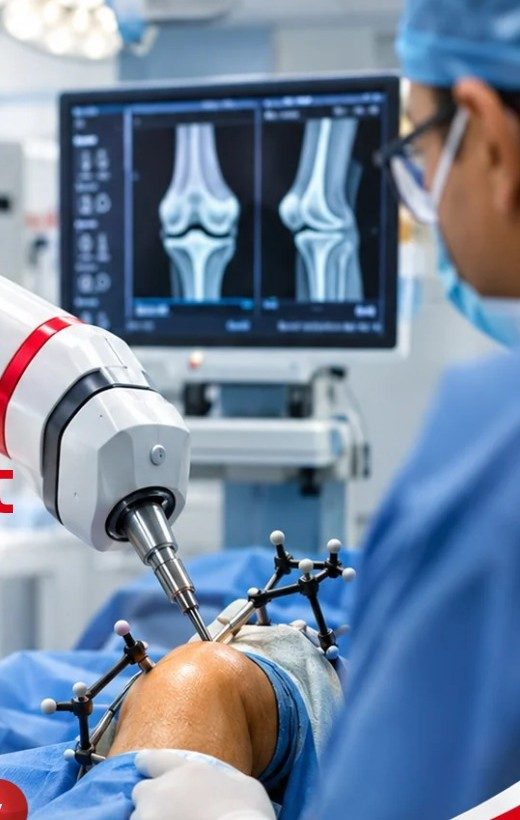
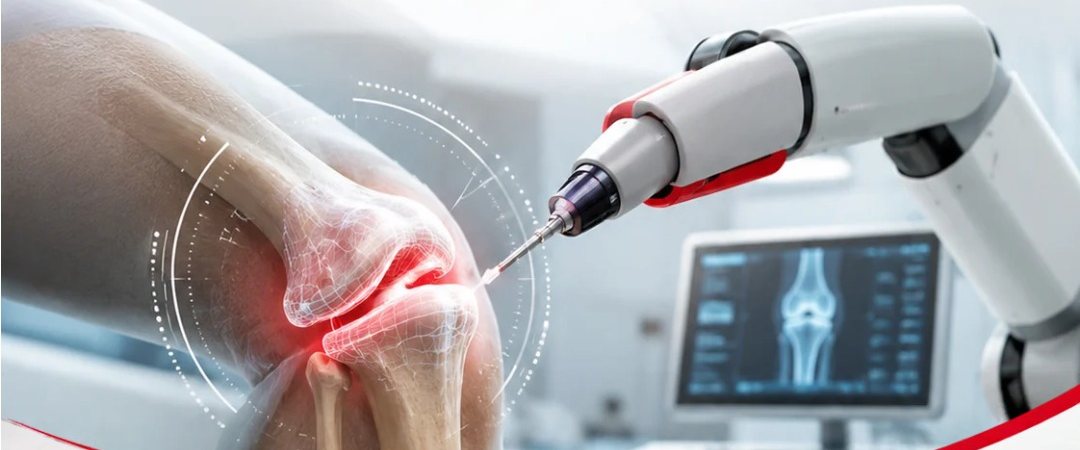
HealthClique Hospital in Mohali uses the Zimmer Biomet ROSA robotic knee system. If you are looking for robotic knee surgery in the tricity, bring your knee X-rays and any previous treatment records to a consultation. An examination and imaging help your surgeon decide whether knee replacement and robotic assistance suit your case.
Your surgeon performs the knee replacement and stays in control throughout. ROSA gives the surgeon measurements about your knee and helps position instruments according to the surgical plan. The surgeon uses that information to check the plan during the operation and decides whether to adjust it.
A CT scan is generally unnecessary for ROSA knee planning. Depending on the workflow used, the surgeon may plan from suitable X-rays or use measurements taken during surgery. Ask what images are needed for your assessment before arranging scans on your own, especially if you already have recent knee X-rays.
The main difference is how the surgeon measures the knee and guides implant placement. With ROSA, tracking and computer feedback help the surgeon check alignment and guide instruments. Conventional surgery uses manual instruments for this work. Discuss which approach fits your knee and what difference you might realistically notice afterwards.
Robotic assistance may be considered once your surgeon has established that knee replacement is appropriate. That decision starts with your pain, daily limitations, examination, imaging and response to other treatments. Your surgeon also considers your health and whether the planned procedure and implant are compatible with the system.
The cost depends on the implant, the robotic setup, whether one or both knees are treated and the care you need in hospital. An exact estimate is given after assessment. Ask for a breakdown of tests, implants, admission and follow-up so you can compare what is included in different estimates.
Recovery speed varies even when the same robot is used. Swelling, strength before surgery, other health conditions and your progress with physiotherapy can all affect how quickly you walk comfortably. Ask the team which milestones to look for, such as walking safely with an aid or managing a step at home.
Robotic knee replacement still carries risks such as infection, blood clots, stiffness and persistent pain. There can also be risks associated with the pins used to attach tracking equipment. Ask your surgeon which risks apply to you and how they would handle a change in the plan during surgery.
Knee resurfacing means replacing worn joint surfaces with implants. Surgeons sometimes use the term for a partial knee replacement that treats one area, and a total knee replacement also involves resurfacing. When discussing surgery near Chandigarh, ask which part of your knee would be treated and exactly what operation is planned.
Partial knee resurfacing may suit someone whose arthritis is limited to one compartment of the knee. The surgeon checks how the knee moves, whether its ligaments keep it stable and how well aligned the leg is. Examination and imaging help show whether the rest of the joint can be preserved.
Arthritis in several parts of the knee generally makes single-compartment resurfacing less suitable. Your surgeon will look at where the damage is, how severe it is and whether it matches your symptoms. Depending on your examination and images, the discussion may cover total replacement or continued nonsurgical care.
A patellofemoral replacement can treat arthritis confined to the joint between the kneecap and the thighbone in selected patients. The surgeon checks whether the pain fits that pattern and whether the other parts of the knee are healthy enough. Examination and imaging help establish if this option is suitable.
Recovery can be quicker after a partial knee replacement for some people. Walking, bending the knee and getting back to work still depend on swelling, strength and the type of work you do. Ask your surgeon what to expect from the procedure you are being offered and how your physiotherapy will be planned.
Yes, a total knee replacement may be needed later if arthritis progresses in other parts of the knee or the partial implant loosens or wears. If pain returns after a period of improvement, have it assessed. The cause and next steps depend on your symptoms, examination and imaging.
The cost depends on the exact operation, the implant, your tests and how much hospital care you need. An exact estimate is given after assessment. When comparing quotes, ask providers to name the planned procedure and list the charges for admission, medicines, physiotherapy and follow-up.
Age alone does not determine whether partial resurfacing is suitable. Your surgeon looks at the location of the arthritis, ligament stability, knee movement, general health and the activities you want to return to. The examination and imaging guide the recommendation and help you discuss how long the implant might serve your needs.
Arthroscopy
8 common questions.
The cost depends on what needs to be done inside the knee, the anaesthesia, any repair implants and the hospital stay. An exact estimate is given after assessment. Ask whether the estimate covers tests, a brace or crutches if needed, and the physiotherapy planned after the operation.
During knee arthroscopy, the surgeon inserts a small camera through an incision to see inside the joint. Instruments passed through other small incisions can treat the problem when appropriate. Ask the surgeon what they expect to do based on your examination and imaging, and what could change once they see inside the knee.
Many patients go home the same day after knee arthroscopy. The team checks your recovery from anaesthesia, pain control and ability to move safely before you leave. Ask in advance whether you need someone to take you home and what help you might need that evening.
Arthroscopy is generally not recommended for knee pain caused by osteoarthritis alone. Exercises, physiotherapy and other nonsurgical options are often considered first. If there is a separate problem, such as a loose fragment blocking movement, your surgeon can assess whether treating that specific problem is appropriate after examining the knee and reviewing the images.
You may need crutches, and how long you use them depends on what was done. A stitched meniscus may need protection while it heals, while some patients can put weight on the leg sooner after a small trim. Follow the weight-bearing instructions for your operation even if the knee feels comfortable.
Drive again only when your care team clears you and you can safely control the car and brake firmly. Which knee was treated, whether you wear a brace and whether pain medicines cause drowsiness all matter. Ask about your own car and how to practise getting in and out safely.
Possible problems include infection, blood clots, stiffness and continuing pain. Contact your surgical team promptly if you develop fever, wound drainage or new calf pain and swelling. Get emergency help if you have sudden shortness of breath or chest pain after surgery. Ask for contact numbers before you leave.
A meniscus repair uses stitches or repair devices to hold torn tissue while it heals. Trimming removes the damaged portion that cannot be saved. Tear location, tissue quality and knee findings influence what is possible. Ask before surgery how each option would affect weight-bearing, physiotherapy and your return to work.
Sports Injuries
8 common questions.

You can consult Dr. Vivek Kochar at HealthClique Hospital in Mohali for a sports injury assessment. Sports medicine and arthroscopy are among his special interests. Bring previous scans if you have them, and explain how you were injured and whether the joint has locked or given way since then.
Some people with an ACL tear can manage well with physiotherapy, particularly if the knee stays stable during the activities they want to do. Repeated giving way, plans to return to a pivoting sport or another injury in the knee can change the advice. Suitability depends on examination and imaging.
Yes, some people can walk after tearing their ACL. The knee may feel unsteady when turning or changing direction, even if walking in a straight line seems manageable. If you felt a pop, developed swelling or keep feeling the knee give way, arrange an assessment before returning to sport.
A torn meniscus is one possible cause of locking after a twist. A loose piece of cartilage can also block movement, and pain or swelling can make the knee hard to straighten. If your knee is stuck and you cannot straighten it, seek prompt assessment and avoid forcing it.
Many meniscus tears can be managed without surgery, especially if the knee moves freely and symptoms settle with rehabilitation. A tear that blocks movement or causes symptoms that persist may need a different approach. The decision depends on the examination, imaging, the tear pattern and how the knee affects daily life.
A sprain and a fracture can both cause pain, swelling and bruising. If the ankle looks misshapen, the foot is numb or cold, or you cannot bear weight after the injury, seek urgent assessment. A clinician can examine the injured area and decide whether an X-ray is needed.
An MRI may be useful if the examination suggests a ligament or meniscus injury, particularly if the knee keeps swelling, locking or giving way. A clinician may start with an X-ray if there are signs of a fracture. Describe how you landed or turned and what happened immediately afterwards.
Return to sport when your care team clears you based on knee stability, strength and how well you move during sport-specific tests. Running in a straight line and changing direction under pressure place different demands on the knee. A physiotherapist can help you build up to practice before you return to matches.
Plan a Visit
8 common questions.
Call +91 99881-20220 to ask for an orthopaedic appointment at HealthClique Hospital. Tell the front desk whether this is your first visit, a second opinion or a follow-up. Have your preferred day in mind and ask whether the doctor you want to see is available that day.
Yes, HealthClique Hospital is open 24 hours. If you are coming for a routine consultation, call +91 99881-20220 to confirm the doctor’s appointment timings before setting out. This is especially helpful if a family member is arranging transport or if you are travelling from elsewhere in the tricity.
HealthClique Hospital is at D-220C, Industrial Area, Phase 8B, Sector 75, adjoining Sector 90-91, SAS Nagar, Mohali, Punjab 140307. Use the full address when booking a cab or sharing directions with a driver. If you need help finding the building or locating the entrance, call +91 99881-20220.
Call +91 99881-20220 to check whether the front desk can fit in a walk-in consultation. Let them know which doctor you want to see or what problem you need assessed. If you have a long drive from Panchkula or Zirakpur, confirming a time can help you plan the visit.
Bring previous X-rays or scans, their reports and a list of your current medicines. If you have had surgery or physiotherapy for the same problem, take the discharge summary or treatment notes. It helps to write down when symptoms started and which activities you want to get back to.
Ask the front desk which insurers and TPAs are accepted. A TPA is a third-party administrator that may handle claims for your insurer. Check with your insurer whether the proposed treatment is covered and needs pre-authorisation. Ask what documents to bring and which charges you may need to pay yourself.
Ask the front desk about bringing a family member to your appointment. A companion can help you get to the hospital, remember questions and take notes if you want them involved. If you are coming for a procedure, ask separately whether you need someone to stay nearby or take you home afterwards.
Confirm your appointment time and share the full Sector 75, Phase 8B address with your driver or family member. If walking is difficult, ask the front desk where you can be dropped off close to the entrance. If tests or a procedure are planned, check whether you have any preparation instructions.
Call us any time on +91 99881-20220 or book a consultation with Dr. Vivek Kochar or Dr. Manu Gupta in Phase 8B, Mohali.