Partial Knee Care
If most of the wear is in one area of your knee, a partial replacement may be an option. We use the examination and imaging to see how much of the joint is affected and explain what resurfacing would involve.
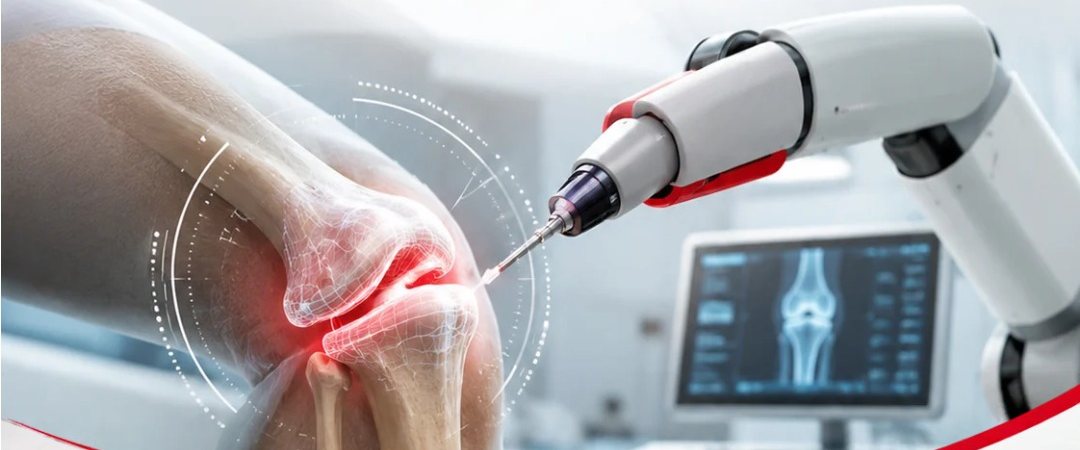

Knee Resurfacing
On a walk through your neighbourhood in Zirakpur, the inside of your knee starts to ache. It hurts in the same spot when you stand to make dinner. Where the pain starts is a clue. We also need to check how stable the knee is and where the joint surfaces have worn.
Knee resurfacing can mean replacing damaged joint surfaces. Here we explain partial knee replacement, which treats one compartment with metal and plastic components. The surgeon aims to preserve healthy surfaces in the rest of the joint. The decision depends on where arthritis is found, ligament stability and how well the knee moves.
A sore spot alone cannot tell us whether partial replacement will help because pain can come from several structures close together. We examine how the knee bends, straightens and carries weight and compare our findings with imaging. If wear is widespread, we discuss total replacement or continued nonsurgical care where appropriate.
Signs and symptoms
These details help us assess where the knee may have worn.
01
You may notice pain mostly on the inside or outside of the knee, especially when walking, standing or changing direction under load.
02
Tell us when the ache starts on a familiar route and whether changing the pace or stopping for a break eases it.
03
Note whether you feel pain going up, going down or both, and whether you have started relying more on a handrail.
04
Tell us if your knee feels steady despite pain. We will check how well the ligaments support it.
05
An earlier X-ray may show narrowing in one area of the knee. Bring the images so we can compare them with your examination.
06
If guided exercises have helped only a little, tell us how long you tried them and what still limits you.
 ▶ How the ROSA Knee System works (Zimmer Biomet)
ROSA robotic knee system
This short patient video from Zimmer Biomet, the maker of ROSA, shows how the system maps your knee before surgery and gives live data in theatre. At HealthClique, Dr. Vivek Kochar and Dr. Manu Gupta use it to plan and check implant position. The surgeon makes every decision.
How it works
We explain how the plan fits your examination and imaging.
Step 01
We ask you to point to the pain and describe when it happens. Then we examine alignment, movement and stability and use imaging to locate the wear.
Step 02
We discuss whether ongoing nonsurgical care, partial replacement or total replacement fits your case. If surgery is suitable, we explain what it involves and talk through the risks.
Step 03
During partial replacement, the surgeon removes damaged surface tissue and prepares the bone in the affected compartment. Metal and plastic components create new bearing surfaces in that section.
Step 04
After surgery, follow the instructions for your wound, exercises and walking aid. At follow-up, we check how the knee is healing and discuss when to take on more activity.
Recovery timeline
Day 1
Most people stand and take a few steps with a walker and the physiotherapist, often within a day of surgery.
Days 3 to 5
Discharge once you can walk safely, manage the toilet and know your exercises. A family member learns them too.
Week 2
Dressing and stitch or clip review. Many people are walking around the house with less support by now.
Weeks 4 to 6
Short walks outside, a sturdier stride, and for many, driving again once the surgeon agrees.
Month 3 and beyond
Longer walks, stairs and travel. The knee keeps getting stronger for up to a year with regular exercise.
A general guide for knee replacement. Your own recovery plan depends on your health, the procedure and your surgeon's advice.
Why HealthClique

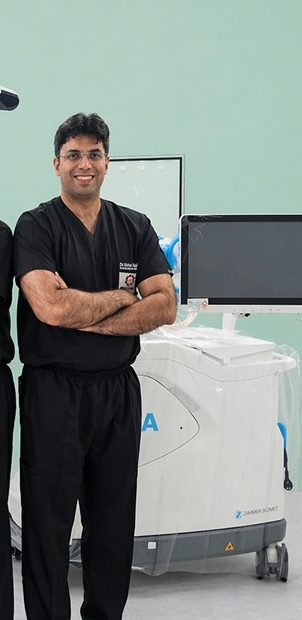
Dr. Vivek Kochar has more than 18 years of orthopaedic experience, with a special interest in robotic knee resurfacing as well as joint replacement.
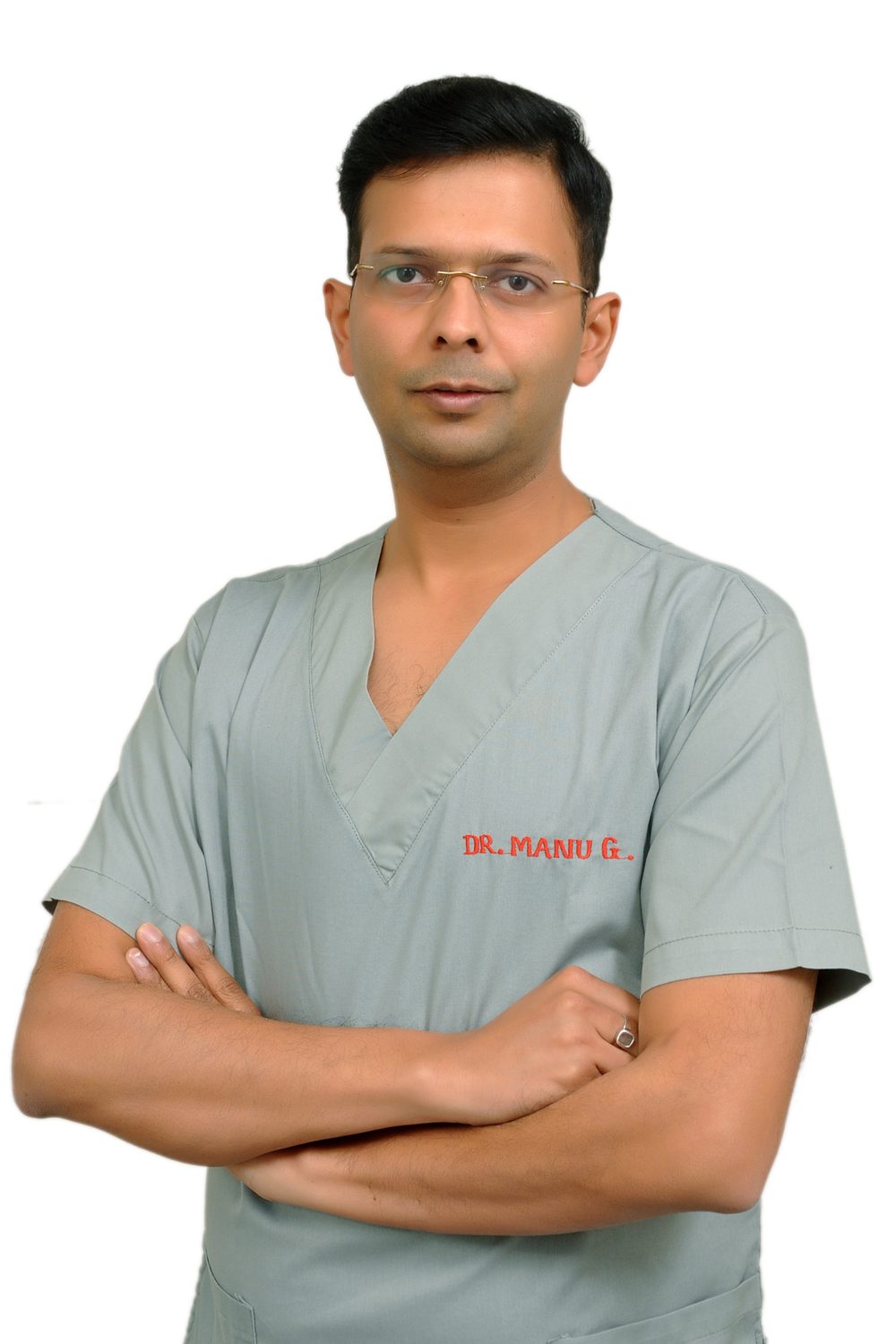
Dr. Manu Gupta is an orthopaedic surgeon and our hospital Director. He holds an MS in Orthopaedics, is a Gold Medalist and works in joint replacement.
Our orthopaedic surgeons’ areas of work include robotic knee procedures. They can discuss whether robotic assistance is suitable for your operation.
HealthClique has performed over 1,500 surgeries across its services. More than 50,000 patients have placed their trust in us for care at the hospital.
Good to know
When you come to us for partial knee replacement in Mohali, one of the first questions is whether wear is largely limited to one compartment. The knee should also have sufficient stability and movement for the planned procedure. Standing X-rays can help us judge joint space under load, and additional imaging may be useful in some cases. We explain what we see and how it relates to your symptoms.
If pain is manageable, exercises, changes in activity or suitable pain relief may still have a role. Where wear affects more than one compartment, a partial replacement may leave other painful surfaces untreated. Ligament problems or pronounced stiffness can also change the recommendation. If symptoms are affecting your whole day, ask which parts of that difficulty we think treatment could improve and which may need separate attention.
If you are exploring knee resurfacing in Mohali, ask what progress would look like for you. Walking to the shops in Panchkula calls for different movement than standing at work or sitting on the floor. Recovery typically involves walking practice and exercises to improve movement and strength. Your pace depends on how you heal and what your team finds at follow-up.
Your surgeons
18+ years experience
Orthopaedic surgeon with a special interest in robotic knee resurfacing, joint replacement, sports medicine and arthroscopy.
MS Ortho, Gold Medalist
Orthopaedic surgeon and Director of HealthClique Hospital. Joint replacement, robotic knee procedures and sports injuries.
FAQs
Ask us anything at your visit. You can also call the hospital any time on +91 99881-20220.
Resurfacing means treating damaged joint surfaces and can refer to partial or total replacement. Here it means partial replacement for selected people with wear limited to one compartment. Ask which surfaces are involved and how much of the joint the surgeon expects to preserve.
X-rays help show where joint space has narrowed, especially when taken standing. We consider them alongside knee stability, movement and your description of the pain. If something is unclear, your surgeon may advise more imaging before discussing whether surgery is suitable.
Arthritis can progress in the parts of the joint that were preserved. This may cause new pain and lead to further treatment, sometimes including total replacement. If pain returns after improvement, an examination and updated imaging can help identify the cause.
Robotic assistance can be used in some partial procedures when the equipment and implants are appropriate. Your surgeon stays in control and performs the operation. Ask which technique fits the affected compartment and how the surgeon checks component positioning and knee movement.
Walking practice often starts early, with the support and weight bearing your team recommends. Comfort, balance and strength affect how soon you are ready for longer walks or uneven ground. Ask when you can safely stop using a walking aid for each setting.
Risks include infection, blood clots, stiffness, persistent pain and problems with the implant. Wear elsewhere in the knee can become more noticeable later. Ask the surgeon which risks apply to you and what symptoms should prompt you to seek help after surgery.
Other treatments
Call +91 99881-20220 for a consultation at HealthClique Hospital in Phase 8B, Mohali. Bring any previous knee images.