Joint Replacement Care
A knee replacement consultation gives you a chance to ask why your knee hurts and whether an operation could help. We review what you have already tried and discuss the choices with you and your family.
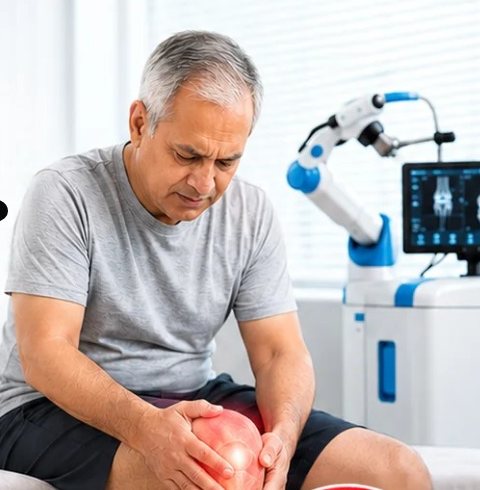
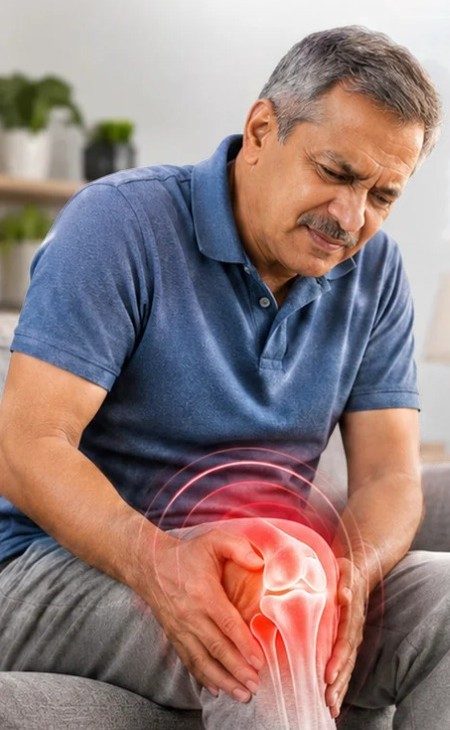
Knee Replacement
You meet friends near the lake in Chandigarh and choose the bench closest to the car park. Everyone else carries on walking. Soon you are making the same calculation at weddings and on trips to the shops. Bring those examples to your consultation so we can understand what knee pain is keeping you from doing.
Ask the surgeon to show you on your X-ray where the joint has worn and explain how that fits with the examination. Some people with visible arthritis can still manage most activities, while others struggle to get through the day. We consider both your symptoms and what the images show before discussing surgery.
If you are comparing knee replacement hospitals around Chandigarh, ask who will assess you and what experience they bring. At HealthClique, Dr. Vivek Kochar and Dr. Manu Gupta are orthopaedic surgeons with experience in joint replacement. Ask about the type of operation, its risks, other treatment options and what recovery may involve.
Signs and symptoms
Tell us about changes that keep getting in the way of your day.
01
If walking across a market takes several stops, explain where the pain starts and what helps it settle.
02
Tell us if you have started leading with the same leg, relying more on the rail or avoiding stairs when you can.
03
Pain that persists when the knee is unloaded or regularly disturbs sleep is worth discussing alongside any symptoms you notice during activity.
04
Needing your hands to push up from a dining chair can reflect pain, stiffness or weakness that we can assess.
05
Report trouble fully straightening or bending the knee, especially if it changes how you walk or how easily you get dressed.
06
If exercise, medicines or a walking aid give limited relief, tell us what you tried and for how long.
 ▶ How the ROSA Knee System works (Zimmer Biomet)
ROSA robotic knee system
This short patient video from Zimmer Biomet, the maker of ROSA, shows how the system maps your knee before surgery and gives live data in theatre. At HealthClique, Dr. Vivek Kochar and Dr. Manu Gupta use it to plan and check implant position. The surgeon makes every decision.
How it works
We start by working out what is causing your symptoms and discuss surgery when the findings support it.
Step 01
We examine your knee and review relevant imaging to see how your symptoms fit with the pattern of joint wear. Bring any reports and a list of current medicines.
Step 02
When surgery is suitable, we explain which surfaces would be replaced and discuss conventional and robotic assistance where appropriate. We also talk through the risks and preparation.
Step 03
Under anaesthesia, the surgeon prepares the worn surfaces at the ends of the thighbone and shinbone and places the components. The kneecap surface may also need attention.
Step 04
After surgery, you receive instructions for exercises, wound care and walking aids. At follow-up, we assess how the knee is moving and discuss changes to activity as you recover.
Recovery timeline
Day 1
Most people stand and take a few steps with a walker and the physiotherapist, often within a day of surgery.
Days 3 to 5
Discharge once you can walk safely, manage the toilet and know your exercises. A family member learns them too.
Week 2
Dressing and stitch or clip review. Many people are walking around the house with less support by now.
Weeks 4 to 6
Short walks outside, a sturdier stride, and for many, driving again once the surgeon agrees.
Month 3 and beyond
Longer walks, stairs and travel. The knee keeps getting stronger for up to a year with regular exercise.
A general guide for knee replacement. Your own recovery plan depends on your health, the procedure and your surgeon's advice.
Why HealthClique
Dr. Vivek Kochar brings more than 18 years of experience to orthopaedics, with a special interest in joint replacement and robotic knee resurfacing.
Dr. Manu Gupta, MS Orthopaedics and Gold Medalist, is the Director of HealthClique Hospital. His orthopaedic work includes joint replacement and robotic knee procedures.
We have the Zimmer Biomet ROSA knee system, which can help the surgeon plan the replacement and guide instrument placement in suitable cases.
HealthClique has performed over 1,500 surgeries across its services. More than 50,000 patients have trusted us for their care at the hospital.
Good to know
People considering total knee replacement in Mohali often ask whether they have waited long enough. There is no fixed point at which everyone needs surgery. It may be worth considering when arthritis is advanced, everyday activities are affected and suitable nonsurgical measures have provided limited relief. Ask what those measures can still offer and what an operation might realistically change for you.
If examination and imaging suggest another cause, we may discuss a different treatment. For instance, pain that travels down from the hip or back can be felt around the knee. Knee replacement addresses the joint surfaces. If wear is limited to one part of the knee, we can also discuss whether a partial replacement is appropriate for that pattern of arthritis.
Consider how recovery would fit into your life. Someone who works at a desk in Mohali and someone who stands for a full shift in Kharar may have different concerns. Before deciding, ask about help at home, travel for follow-up and the kind of work you do. The pace of recovery varies, and returning to a task depends on strength, movement and your surgeon’s advice.
Your surgeons
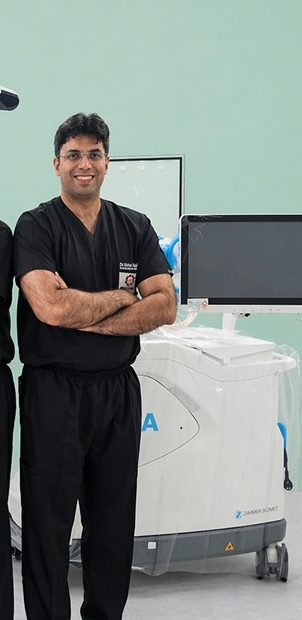
18+ years experience
Orthopaedic surgeon with a special interest in robotic knee resurfacing, joint replacement, sports medicine and arthroscopy.
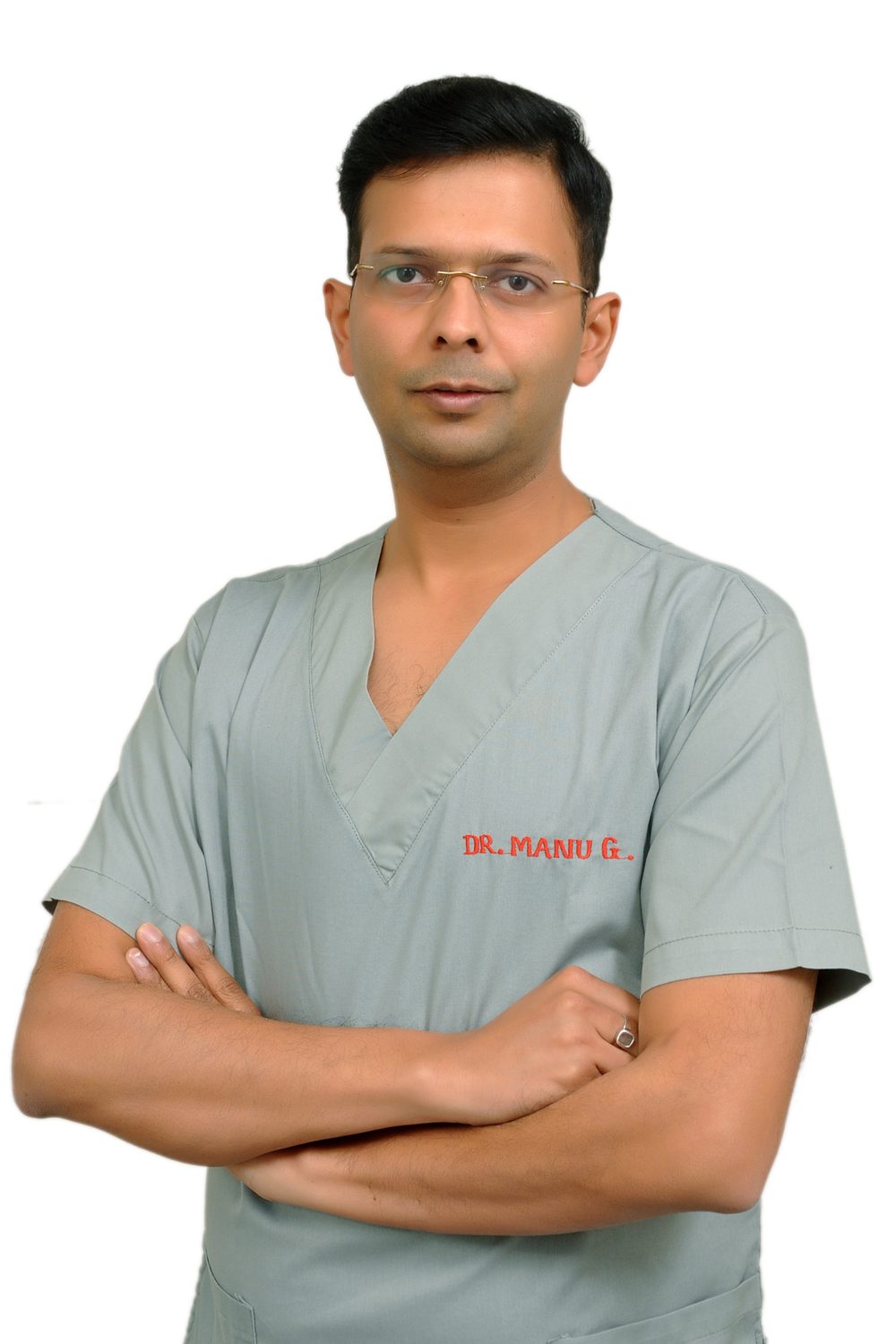
MS Ortho, Gold Medalist
Orthopaedic surgeon and Director of HealthClique Hospital. Joint replacement, robotic knee procedures and sports injuries.
FAQs
Ask us anything at your visit. You can also call the hospital any time on +91 99881-20220.
Ask about the surgeon’s experience with the procedure you may need and how they judge suitability. You should come away clear about your diagnosis, alternatives, what the operation involves and how recovery will be checked. Bring someone if you would like support.
The phrase describes severe narrowing where cartilage has worn away. The decision also depends on pain, function, general health and what other treatments have achieved. If you can still manage your usual activities comfortably, ask whether continuing nonsurgical care makes sense.
A partial replacement treats one area of wear when the rest of the joint and its supporting structures are suitable. A total replacement addresses more of the joint. Examination and imaging help us decide whether either option fits your symptoms and pattern of wear.
Age is one part of the decision. Medical conditions, medicines, walking ability and the support available during recovery all matter. Bring relevant records and tell us about recent illnesses or procedures so we can discuss the likely benefits and risks for you.
Deep bending after replacement varies with your starting movement, comfort and recovery. If you sit on the floor for meals, prayer or family occasions, tell your surgeon. We can discuss what may be realistic and how to try the activity when cleared.
Cost depends on the procedure, implant, anaesthesia, tests and length of stay. Care for other medical conditions or rehabilitation can also affect your budget. We give an exact estimate after assessment. Ask what is covered and what you might pay for separately.
Other treatments
Call +91 99881-20220 to book a consultation at HealthClique Hospital in Phase 8B, Mohali. Bring previous X-rays and tell us which activities you want to get back to.