
Robotic vs Conventional Knee Replacement Surgery Compared
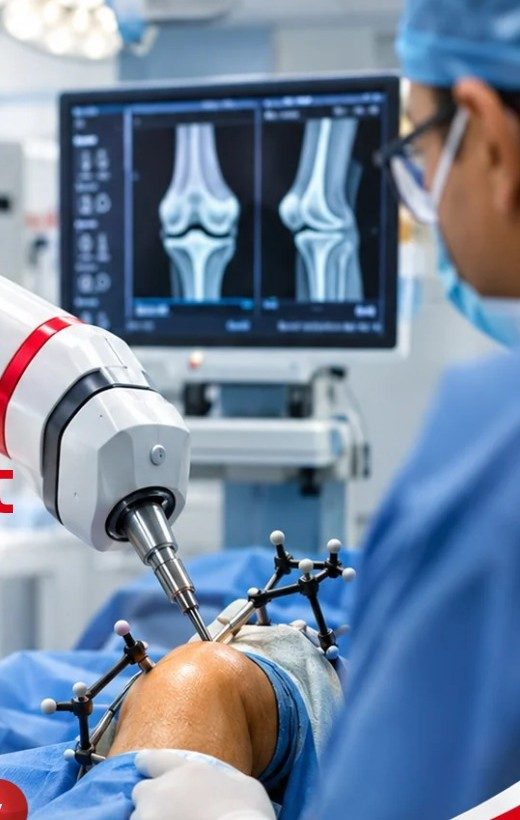
Quick answer: Both conventional and robotic knee replacement replace worn joint surfaces with implants. Robotic assistance gives the surgeon extra measurements and guidance during the operation, while recovery depends on your health, the condition of your knee and rehabilitation. If you’re considering robotic knee joint replacement surgery in Chandigarh, ask what the technology would add in your case.
Imagine a winter morning in Sector 44, Chandigarh. A man pauses halfway down the stairs while his daughter heads outside to warm up the car. His knee has been painful for years and the morning trip to buy milk now takes planning. Later, at the dining table, she pulls up a video of a robotic arm and asks whether he’d be walking sooner if he chose that operation.
It’s a fair question. There are really two decisions in it: whether he needs a knee replacement and, if so, how the surgeon would carry it out.
What stays the same with either operation?
In a total knee replacement, the surgeon prepares the damaged surfaces at the ends of the thighbone and shinbone. Metal components cover those surfaces, and a plastic insert fits between them to provide a smooth moving surface. The surgeon may also resurface the underside of the kneecap, depending on the case. These steps address the joint damage in both approaches.
We often see families start with the name of the machine. Before comparing techniques, ask what findings make a replacement reasonable now. Severe pain or stiffness that limits daily life despite suitable nonsurgical treatment can be a reason to discuss the operation. Take along older X-rays if you have them and explain what you can manage on an ordinary day, including whether you need help to bathe, dress or get to the market. AAOS guide to total knee replacement.
What does robotic assistance change during surgery?
In conventional surgery, the surgeon uses instruments such as alignment rods and cutting guides to prepare the bone. The surgeon checks how the knee moves and balances, then makes adjustments as needed. In robot-assisted surgery, the system can collect measurements of the knee and help the surgeon plan implant positioning and guide steps in bone preparation. The details depend on the system being used.
The surgeon makes the decisions. That includes choosing the intended alignment, judging the tension of the tissues around the joint and deciding whether the plan needs to change during surgery. If the term “robotic” makes you picture a machine operating on its own, ask your surgeon to show you which parts of the operation the system assists and which measurements it provides.
Does greater precision mean less pain or faster recovery?
There is a difference between measuring where an implant sits and finding out how someone feels getting out of bed. A large randomised trial called RACER-Knee compared a specific robotic-arm system with conventional instruments. It found no meaningful improvement with robotic assistance on its main patient-reported measure of pain and function at its primary follow-up. Results from one system and one study also have limits when applied to another technique or an individual patient. RACER-Knee randomised trial.
Ask about the first stretch at home. How will you get in and out of the car? Is there a bathroom on the same floor as your bed? Both methods need a plan for pain control, safe movement and physiotherapy. Strength before surgery, other health conditions and how your knee responds to rehab all matter when setting a date to drive again or return to work. Be specific about what you want to do. Walking across a room and standing through a full work shift are different goals.
If a family member will be helping at home, bring them to the discussion. They may think to ask how much assistance you’ll need getting to the toilet or taking a shower.
What risks and costs should you discuss?
Infection, blood clots, stiffness and continuing pain are possible with either operation. A surgeon can explain which risks matter most for you and what can be done to reduce them. Bring a list of your medicines and say if you take anything for diabetes or to prevent blood clots. Ask for instructions on how to manage them around surgery. Your care team should guide any changes.
If you receive two estimates, check whether the same implant type, hospital stay and follow-up care are included. With a robotic procedure, ask whether planning scans or charges related to the equipment are separate. Account for physiotherapy and time away from work as well. HealthClique Hospital gives the exact cost after assessment, when the proposed operation and your care needs can be discussed.
How does HealthClique Hospital approach this choice?
At HealthClique Hospital in Mohali, our departments include robotic knee replacement, knee resurfacing and joint replacement. We use the ROSA robotic knee system. Our lead surgeon, Dr. Vivek Kochar, has more than 18 years of orthopaedic experience, with a focus on robotic knee resurfacing, joint replacement and advanced orthopaedic procedures.
Bring your questions about the proposed operation. For instance, if you’ve heard that “robotic” and “partial” mean the same thing, ask to see which areas of your knee are affected. Knee resurfacing and total replacement describe how much of the joint is treated. Robotic assistance describes a way of helping the surgeon perform the planned procedure. Keep those two ideas separate when you read your estimate.
Frequently asked questions
Who controls the robotic system during knee surgery?
The surgeon controls the procedure and uses the system to assist with specific steps. Ask how the surgeon uses the measurements it provides and how the surgical plan is checked during the operation.
Will I need a CT scan for robotic knee replacement?
It depends on the robotic system and the planning method used. Some approaches use a CT scan. Ask what imaging is needed for your operation, whether you can use recent images and how any new imaging is billed.
Will a robotic implant last longer?
Longer implant life cannot be assumed from robotic assistance alone. Implant choice, how it is positioned, your health, activity and other factors may affect how it holds up. Ask what follow-up is recommended for the implant being proposed.
Can I go back to climbing stairs after either operation?
Many patients practise stairs as part of recovery, using support as their care team advises. The timing depends on strength, balance and how healing progresses. Tell your team before surgery if stairs are unavoidable at home.
Is conventional replacement still an option?
Yes. Conventional total knee replacement remains an established option for suitable patients. Ask a knee replacement surgeon to explain which technique they would recommend for your knee and why.
If you’d like to discuss whether robotic assistance makes sense for your knee, visit our robotic knee replacement page.
Dr. Vivek Kochar and Dr. Manu Gupta see patients at HealthClique Hospital, Phase 8B. Bring your reports and your questions.
This article is general information, not medical advice. Your treatment depends on your examination and scans.